How Local SEO Helps Businesses Rank on Google
Rank Higher in 2026 · Drive More Organic Traffic
If you run a business in Howrah, Kolkata, or anywhere serving a specific city or
neighborhood, you're not actually competing with every business in India for Google's
attention. You're competing with the handful of businesses near you — and that's a fight
you can realistically win. That's what local SEO is built for.
Local SEO is the practice of optimizing your online presence so your business shows up
when nearby customers search for what you offer — whether that's "web development
company in Howrah" or the simple, high-intent "near me" searches people type when
they're ready to act right now. Here's how it works, and why it matters so much for growing
businesses.
Why Local SEO Is Different From Regular SEO
Regular SEO tries to rank you for a keyword against every website in the country,
sometimes the world. Local SEO narrows that competition down to businesses that are
actually relevant to someone's location — which means a small business with limited
resources has a genuinely fair shot at ranking well, without competing against national
brands with far bigger budgets.
Google also treats local searches differently. When someone searches "SEO agency near
me" or "automation company Howrah," Google prioritizes proximity, relevance, and
prominence — not just generic domain authority. This is exactly why local SEO deserves its
own strategy rather than being treated as an afterthought to general SEO.
Pro Tip: Add weekly posts and update photos regularly to improve local visibility.
The Core Pillars of Local SEO
1. Google Business Profile (GBP)
This is usually the single highest-impact step for local visibility. A complete, accurate
Google Business Profile is what shows up in the "map pack" — the block of three local
businesses Google displays above regular search results for local queries.
To make this work well:
Fill out every field accurately: category, address, phone number, hours, website, and
service area.
Add real photos of your business, products, or work — profiles with photos get far
more engagement than blank ones.
Keep your hours updated, especially around holidays — inaccurate hours quietly cost
you customers who show up when you're closed.
Post updates occasionally — offers, new services, or announcements keep your profile
active in Google's eyes.
2. NAP Consistency
NAP stands for Name, Address, Phone number. Google cross-checks your NAP across your
website, Google Business Profile, and any directories or listings you appear on.
Inconsistencies — even something as small as "Street" versus "St." — can quietly weaken
your local ranking signals because it makes Google less confident it's dealing with a single,
legitimate business.
3. Local Keywords
Local SEO relies on keywords that combine what you do with where you do it — "business
automation services Howrah," "web design agency Kolkata," "digital marketing for MSMEs
near Salt Lake." These phrases carry strong intent: someone typing them is often close to
making a decision, not just browsing.
Local keywords should appear naturally in your page titles, headers, and content — not
stuffed in unnaturally, but woven in the way you'd actually describe your service to a
nearby customer.
4. Customer Reviews
Reviews do double duty in local SEO — they're a ranking signal for Google, and they're
social proof for the human reading them. A steady stream of genuine reviews, especially
ones that mention your services or location naturally, tells both Google and potential
customers that you're active, trusted, and locally relevant.
Responding to reviews — good and bad — also matters. It shows you're engaged, and
Google notices that activity too.
5. Local Content
Publishing content that speaks directly to your city or region — like this article does —
helps Google associate your website more strongly with your target location. Blog posts
about local industry trends, case studies of local clients, or guides specific to your area's
business landscape all reinforce your local relevance over time.
6. Local Backlinks
Links from other locally relevant websites — business associations, local news coverage,
community directories, partner businesses — carry extra weight for local rankings. They
signal to Google that your business is genuinely embedded in the local business
community, not just an anonymous website with no real-world footprint
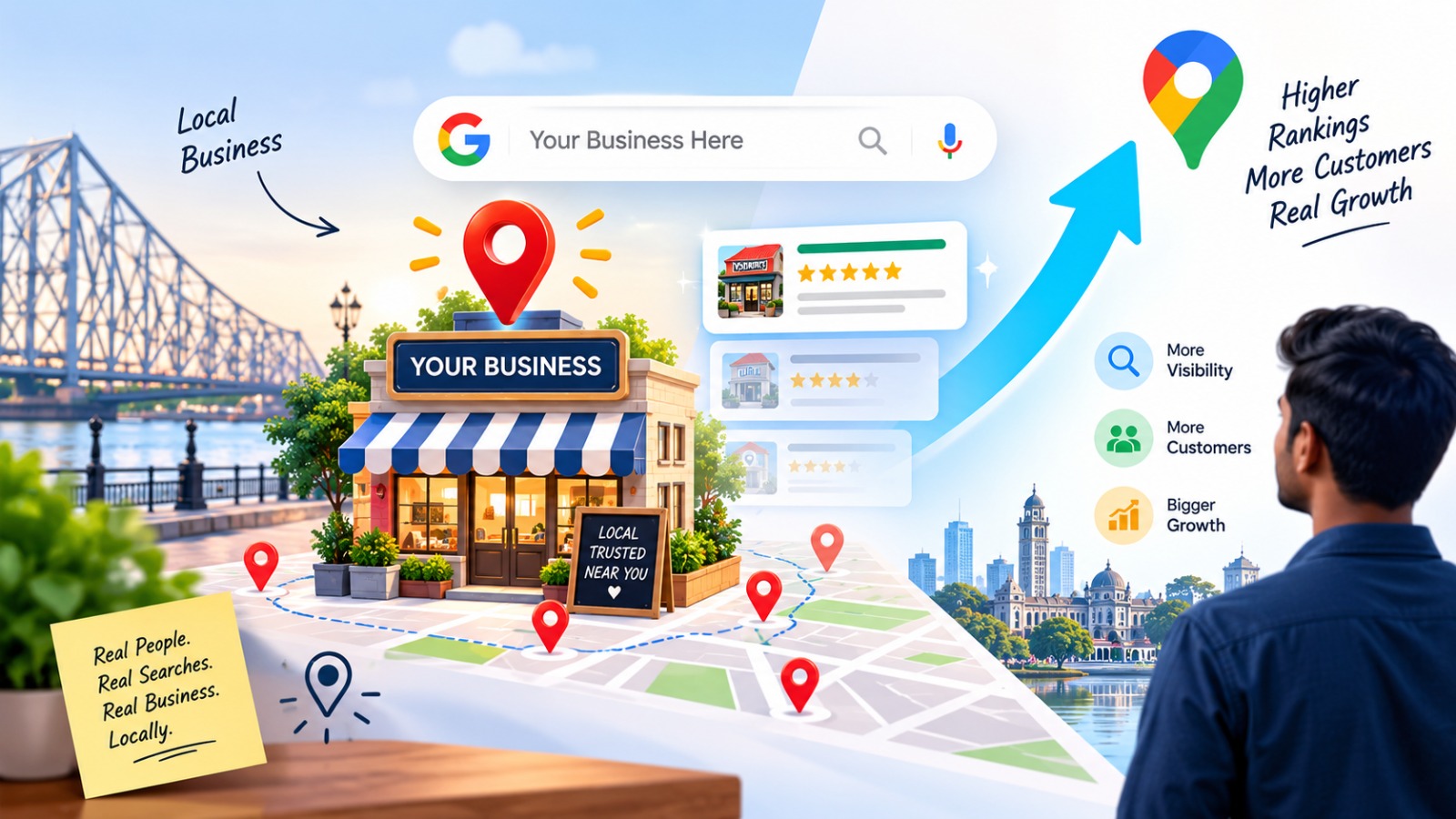
Why This Matters So Much for MSMEs
For a growing business without a national ad budget, local SEO is often the highest-return
investment available. It targets exactly the customers most likely to convert — people
nearby, actively searching, with real intent to buy or enquire — rather than casting a wide,
expensive net across an entire country.
It also compounds. A well-optimized Google Business Profile, consistent NAP, genuine
reviews, and locally relevant content all keep working for you long after the initial effort —
unlike paid ads, which stop delivering the moment the budget runs out.
Getting Local SEO Right Takes Ongoing Attention
Local SEO isn't a one-time setup. Profiles need regular updates, reviews need to be
encouraged and responded to, local content needs to keep being published, and NAP
consistency needs to be maintained as your business grows or changes. For most business
owners already stretched across operations, sales, and staff, keeping up with all of this
consistently is difficult to sustain alone.
This is where Trustlytics Consulting fits in — helping growing businesses across Howrah
and Kolkata build and maintain a strong local SEO presence, from Google Business Profile
optimization to locally targeted content and website structure, so that when nearby
customers search for what you offer, they find you first.
Frequently Asked Questions
Need help improving your SEO & growing your business?
Our expert team is ready to help you rank higher and get more leads.