Grow Your Brand with Digital Marketing: A Practical Guide for Growing Businesses
Building a brand used to mean word-of-mouth, a good location, and years of consistent quality. Those things still matter — but today, a huge share of that reputation-building happens online, before a customer ever walks through your door or picks up the phone. If your business isn't showing up in that space, you're invisible to a growing number of the customers who'd otherwise choose you.
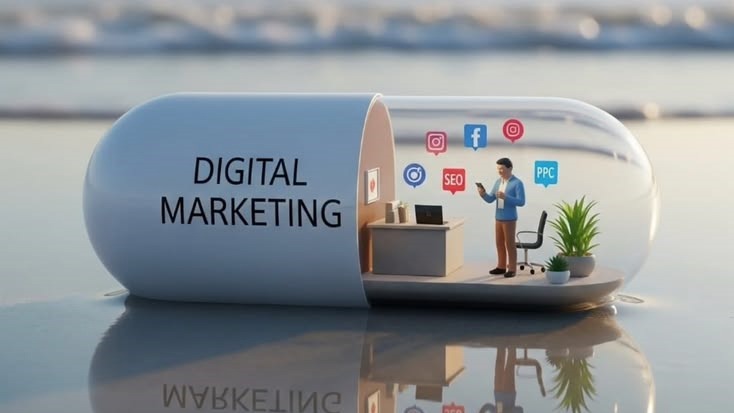
Digital marketing isn't about chasing trends or vanity metrics like follower counts. Done right, it's a structured way of putting your brand in front of the right people, consistently, in a way that builds trust over time and turns strangers into customers. Here's how to approach it practically.
Start With Clarity, Not Channels
The most common mistake businesses make is jumping straight into "we need to be on Instagram" or "we need Google Ads" without first getting clear on the basics:
Who exactly is your customer? Not "everyone" — the specific type of person or
business that actually buys from you.
What problem do you solve for them, in their words? Not your internal jargon, but
how they'd describe their own need.
What makes you the right choice over a competitor? Price, quality, speed, trust, local
presence — know your real edge.
Digital marketing without this clarity becomes expensive guesswork — throwing content
and ad spend at a wall and hoping something sticks. With it, every channel you use
becomes more effective, because you're speaking directly to a real person with a real need
Pro Tip: Focus only on metrics that directly impact business growth and decision-making.
Build a Website That Works as Hard as You Do
Your website is often the first real impression a potential customer forms of your business — sometimes before they've spoken to anyone on your team. It needs to load fast, clearly explain what you do, and make it easy to take the next step, whether that's calling, messaging, or filling out a form.
An outdated, slow, or confusing website quietly undoes the trust your other marketing efforts are trying to build — no amount of good advertising fixes a website that loses people the moment they land on it.
Use SEO to Be Found When It Matters Most
Search Engine Optimization is how your brand shows up when someone is actively looking
for what you offer — arguably the highest-intent moment in the entire customer journey.
Someone searching "business automation services Howrah" isn't just browsing; they're
close to a decision.
A solid SEO foundation — the right keywords, a fast and well-structured website, a
complete Google Business Profile, and genuine local reviews — builds visibility that keeps
compounding for months and years, unlike ads that stop the moment you stop paying
Use Paid Ads to Accelerate, Not Replace, Organic Growth
Platforms like Meta and Google Ads let you put your brand in front of the right audience immediately, rather than waiting for organic reach to build. This is especially useful for:
Launching a new product or service and needing visibility fast
Retargeting people who visited your site but didn't convert yet
Testing which messaging and offers resonate before scaling them further
Paid ads work best as an accelerant on top of a strong foundation — a good website, clear
messaging, real trust signals — rather than a substitute for having those fundamentals in
place. Spending on ads that drive traffic to a weak website or unclear offer usually just
means paying more to lose the same customers you'd lose organically.
Build Trust With Content, Not Just Promotion
Brands that grow sustainably usually aren't the ones shouting the loudest about
themselves — they're the ones consistently offering something useful: answering common
customer questions, sharing behind-the-scenes glimpses of how the business operates,
showing real results and real customers.
This content does double duty — it improves your SEO over time, and it builds the kind of
familiarity and trust that makes someone choose you when they're finally ready to buy,
even if they first found you weeks or months earlier.
Use Social Media With Intent, Not Obligation
Social media works best when it's used deliberately for your specific audience, rather than
treated as a box to tick because "every business needs a presence." A B2B service business
and a local retail shop need very different social strategies — different platforms, different
content styles, different goals.
Focus on the one or two platforms where your actual customers spend time, and use them
to build familiarity and trust — testimonials, behind-the-scenes content, quick tips —
rather than spreading thin across every platform with generic, low-effort posts.
Track What's Actually Working
Digital marketing gives you something traditional marketing rarely could: real, measurable
data on what's working and what isn't. Website traffic, ad performance, enquiry sources,
conversion rates — all of it is trackable, if you're set up to track it.
Businesses that grow their brand efficiently are the ones reviewing this data regularly and
adjusting — doubling down on what's converting, fixing or cutting what isn't — rather than
running the same campaigns on autopilot for months without checking whether they're
actually delivering.
Frequently Asked Questions
Need help improving your SEO & growing your business?
Our expert team is ready to help you rank higher and get more leads.