How Digital Learning is Transforming Modern Education
Smart Learning for the Modern Generation
A decade ago, "attending class" meant one thing: a fixed classroom, a fixed time, a teacher
standing at the front of the room. Today, that definition has quietly expanded — students
learn from recorded lectures at midnight, take live doubt-clearing sessions over video call,
and access entire courses that didn't exist in any physical classroom at all. Digital learning
hasn't just added new tools to education. It's reshaping what education actually looks like.
For students, parents, and institutions alike, understanding this shift matters — not just to
keep up, but to make better decisions about how learning happens going forward.
From One-Size-Fits-All to Personalized Learnin
Traditional classrooms are built around a single pace — one lesson plan, moving at one speed, for a room full of students with very different learning needs. Digital learning breaks that constraint. A student who grasps a concept quickly can move ahead; one who needs more time can replay a lecture, retry a quiz, or revisit a topic without holding back the rest of the class or feeling left behind
This shift toward self-paced, adaptive learning is one of the most meaningful changes digital education has brought — it treats students as individuals with different starting points, rather than a uniform group
Access Beyond Geography
Perhaps the most transformative impact of digital learning is what it's done for access. A student in a small town no longer needs to relocate or commute hours to learn from a quality teacher or access a well-structured course. Coaching institutes, certification courses, and even full degree programs are now reachable from a phone or laptop, regardless of where the student lives
This matters especially for working professionals upskilling alongside a job, or students in areas where specialized coaching simply wasn't available before. Digital learning has narrowed a gap that used to be defined almost entirely by location
Interactive and Engaging Formats
Digital learning isn't just traditional lectures moved online — it's introduced entirely new formats that keep learners engaged in ways a static classroom often struggles to:
Video content that can be paused, rewound, and revisited as many times as needed.
Interactive quizzes and assessments that give instant feedback instead of waiting
days for a graded paper.
Gamified learning elements — progress tracking, badges, streaks — that build
consistency and motivation, especially for younger learners.
Discussion forums and peer interaction, letting students learn from each other, not
just from a single instructor.
These formats don't replace good teaching — they extend it, giving students more ways to engage with material until it actually sticks
Challenges That Come With the Shifs
Digital learning isn't without its difficulties, and it's worth being honest about them:
The digital divide — not every student has reliable internet access or a suitable
device, and this gap can quietly widen educational inequality if not addressed.
Reduced in-person interaction — some of what happens in a physical classroom,
from social development to spontaneous discussion, doesn't translate perfectly
online.
Self-discipline demands — self-paced learning requires a level of motivation and
time management that not every student, especially younger ones, has fully
developed yet.
Screen fatigue — extended hours in front of a screen bring their own challenges to
attention and wellbeing.
The institutions and platforms getting this right are the ones designing around these challenges deliberately, rather than assuming digital automatically means better.
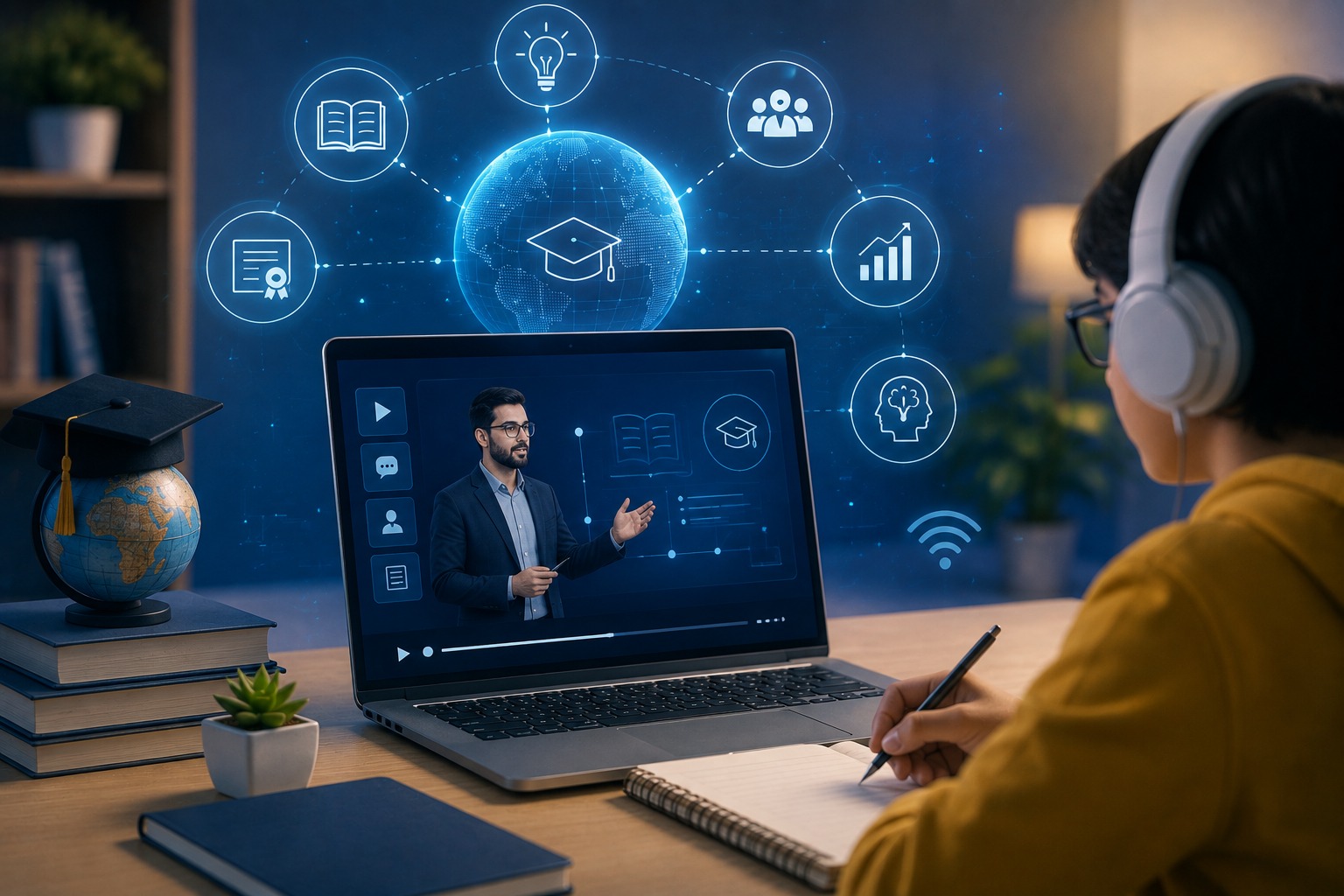
Access Beyond Geography
Perhaps the most transformative impact of digital learning is what it's done for access. A student in a small town no longer needs to relocate or commute hours to learn from a quality teacher or access a well-structured course. Coaching institutes, certification courses, and even full degree programs are now reachable from a phone or laptop, regardless of where the student lives
This matters especially for working professionals upskilling alongside a job, or students in areas where specialized coaching simply wasn't available before. Digital learning has narrowed a gap that used to be defined almost entirely by location
What This Means Going Forward
The future of education increasingly looks like a blend — not a full replacement of classrooms, but a combination of in-person interaction where it adds real value, and digital tools where they extend access, personalization, and insight. Hybrid models that combine live instruction with digital resources, data-backed teaching improvements, and flexible, self-paced options are likely to define how learning happens for the coming years. For educational institutions and coaching businesses navigating this shift, the underlying challenge often isn't just adopting digital tools — it's building the right digital presence and systems around them: a website that clearly communicates their courses, the analytics to understand student engagement, and the marketing reach to connect with the students who need them. This is where a consultancy like Trustlytics Consulting can support education-focused businesses across Howrah and Kolkata — helping them build the digital infrastructure and visibility needed to grow in an increasingly online-first learning landscape.
Access Beyond Geography
Perhaps the most transformative impact of digital learning is what it's done for access. A student in a small town no longer needs to relocate or commute hours to learn from a quality teacher or access a well-structured course. Coaching institutes, certification courses, and even full degree programs are now reachable from a phone or laptop, regardless of where the student lives
This matters especially for working professionals upskilling alongside a job, or students in areas where specialized coaching simply wasn't available before. Digital learning has narrowed a gap that used to be defined almost entirely by location
Frequently Asked Questions
Need help improving your SEO & growing your business?
Our expert team is ready to help you rank higher and get more leads.